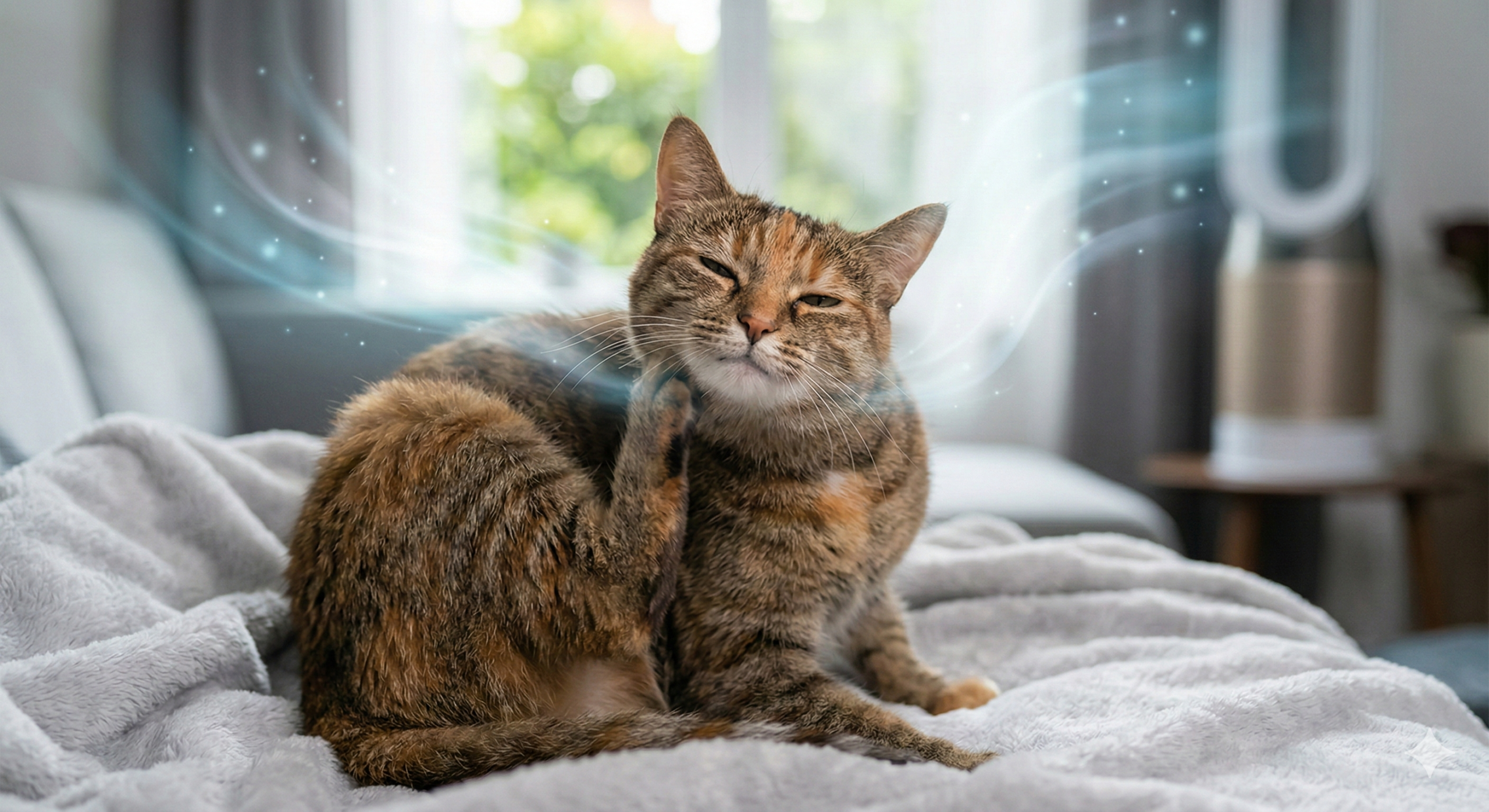
As the mercury rises and the windows stay shut to keep the AC in, many pet owners notice a familiar, frustrating ritual: the “Summer Itch.”
You see your dog or cat constantly licking their paws, scratching their ears, or rubbing their face against the carpet.
Most of us immediately point the finger at grass pollen, fleas, or perhaps a change in diet.
While those are common culprits, there is a hidden factor often overlooked in the heat of July: the quality of the air inside your home.
The “Indoor Trap” Phenomenon
During the summer, our homes become closed ecosystems. To stay cool, we seal doors and windows, which inadvertently traps a cocktail of irritants.
For a pet, who spends 90% of their time within two feet of the floor, this “indoor trap” can be a nightmare for their skin and respiratory system.
When air stagnates, several microscopic triggers reach peak concentrations:
- Micro-Dust & Spores: High humidity can lead to silent mold growth in cooling vents. These spores don’t just affect breathing; they land on your pet’s fur and migrate to the skin.
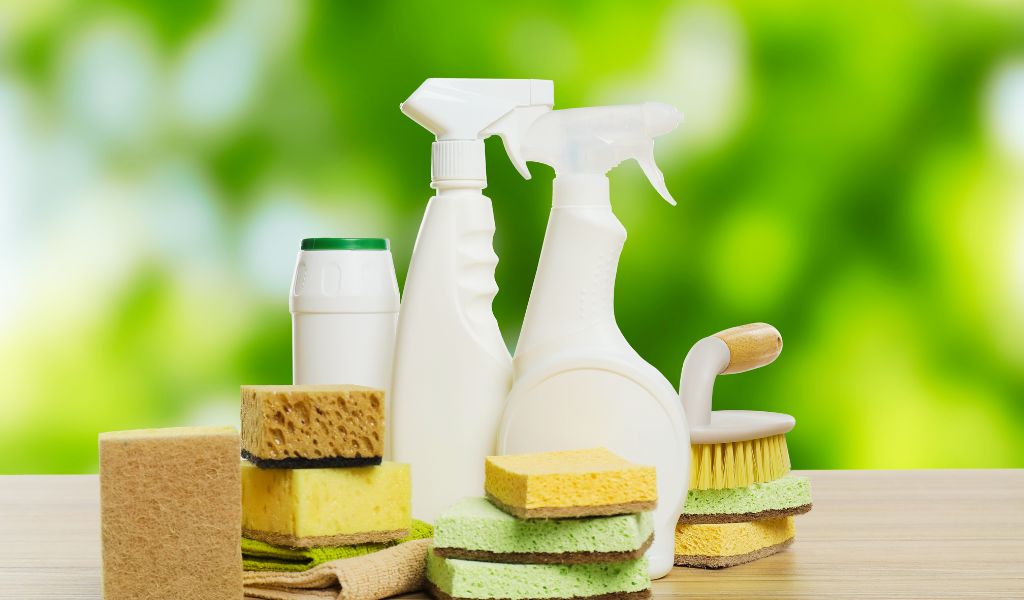
- Volatile Organic Compounds (VOCs): Summer cleaning often involves heavy-duty disinfectants. Without proper ventilation, these chemical vapors hang in the air, causing “contact dermatitis” or general skin sensitivity.
- Recycled Dander: Without a high-exchange filtration system, your pet is essentially breathing and “wearing” their own shed skin cells, which can become more irritating as they break down in the heat.
The Science of the “Skin-Air Barrier”
Biologically, your pet’s skin acts as a barrier. However, in the summer, heat causes the pores to dilate and the skin to become slightly more moist.
This makes the skin more permeable to particulate matter (PM) floating in your home.
When fine dust or outdoor pollen (tracked in on your shoes) hitches a ride on the indoor air currents, it settles into your pet’s coat.
Because the air isn’t being “scrubbed” or replaced, these particles sit against the skin, triggering an immune response.
This leads to the redness, inflammation, and the relentless scratching we mistake for a simple “outdoor” allergy.
Red Flags: Is it the Air or the Grass?
If you aren’t sure if your home’s air is the culprit, look for these specific “Indoor Itch” signs:
- The Nighttime Scratch: If your pet is fine on walks but starts scratching vigorously once they’ve been inside for an hour, the indoor air is likely the trigger.
- The “Venting” Habit: Does your pet lay directly in front of A/C vents? If those vents haven’t been cleaned or filtered, they are blowing concentrated allergens directly onto your pet’s coat.
- Visible “Dust Motes”: If you can see dust dancing in the sunlight beams in your living room, imagine what is settling into your dog’s fur.
How to Clear the Air (and the Itch)
Improving your pet’s comfort doesn’t require a degree in atmospheric science. It requires a proactive approach to Indoor Air Hygiene.
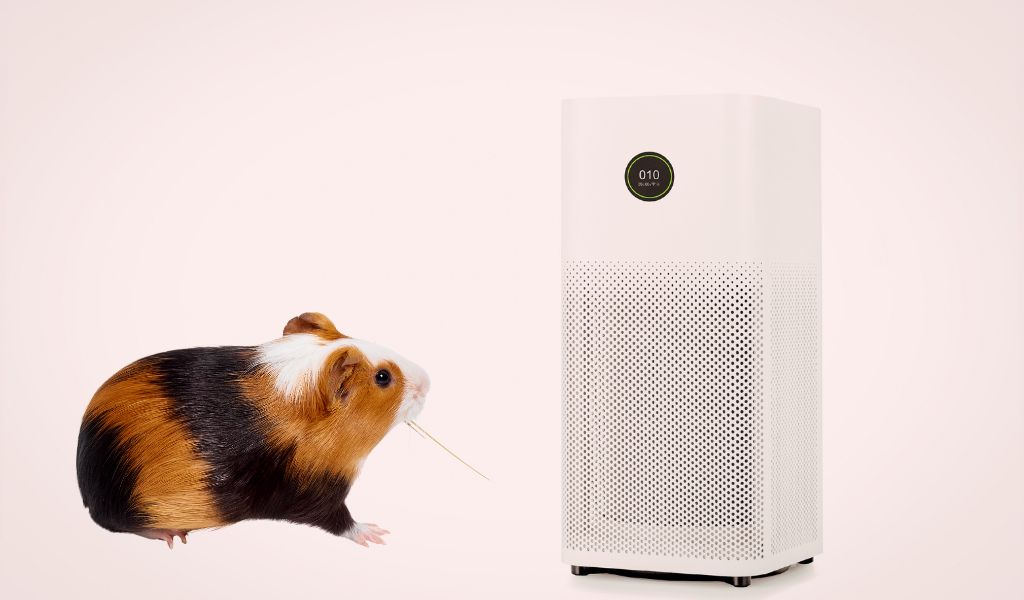
- Upgrade to HEPA: Standard 1-inch furnace filters aren’t enough for pet homes. Using a dedicated air purifier with a True HEPA filter ensures that 99.97% of those microscopic “itch-triggers” are pulled out of the air before they reach your pet.
- Manage Humidity: Keep your indoor humidity between 40% and 50%. Anything higher encourages dust mites and mold; anything lower dries out your pet’s skin, making it crack and itch more.
- The “Entryway Protocol”: Since we can’t stop outdoor allergens entirely, use a damp cloth to wipe your pet down after walks. This prevents them from bringing the “outside air” in to settle on your rugs and furniture.
A Breath of Fresh Relief
We often think of “air quality” as a broad, environmental issue, but for a pet, it is a very personal, physical one.
By treating the air in your home with the same importance as the food in their bowl, you can often solve the mystery of the “Summer Itch” without an expensive trip to the vet.
When the air is pure, the skin stays calm—and your pet can get back to the important business of napping in the shade.
If you’ve noticed your pet scratching more lately, it might be time for a home air audit.
To help you turn the science of air quality into a tangible solution for your home, here are three highly-rated products available on Amazon. Each is specifically chosen for its ability to handle the heavy dander and biological load that come with a multi-pet household.
1. Levoit Core 400S Smart Air Purifier
The Core 400S is widely considered the gold standard for pet owners who want a “set it and forget it” solution. It features a high-precision laser sensor that scans your air in real-time, which is especially helpful during the summer when dust and pollen levels fluctuate hourly.
- Star Rating: ⭐⭐⭐⭐⭐ (4.7/5)
- The Review: This unit is a powerhouse for medium-to-large rooms. What makes it a “pet-first” choice is the VortexAir™ Technology, which creates an aerodynamic cell that pulls in air from 360 degrees—essential for catching fur that tends to settle in corners. The app integration is seamless, allowing you to boost the fan speed from your phone if you notice your pet starting a “scratching session.”
2. Blueair Blue Pure 211i Max
If you have a large, open-concept living area where your pets spend most of their day, the Blueair 211i Max is the “heavy lifter” of the industry. It uses a unique HEPASilent™ technology that provides the filtration of a True HEPA filter but with much higher airflow and less noise.
- Star Rating: ⭐⭐⭐⭐⭐ (4.8/5)
- The Review: This is the quietest high-performance machine on the market. It can refresh the air in a 600 sq. ft. room every 12 minutes. For pet owners, the washable fabric pre-filter is a game changer; it catches the “big stuff” like hair and heavy dander before it ever reaches the internal filters, extending the life of your expensive HEPA replacements.
3. Coway Airmega 250S
The Airmega 250S focuses on the “contact” side of allergies. Its Green True HEPA™ filter is treated with an antimicrobial coating specifically designed to deactivate the growth of mold and bacteria—two common triggers for the “Summer Itch” that thrive in humid AC vents.
- Star Rating: ⭐⭐⭐⭐ (4.5/5)
- The Review: The Airmega is built like a tank and features a “Rapid Mode” that is incredibly effective at clearing out sudden spikes in allergens. We particularly like the Eco Mode: once the air has been purified for 10 minutes, the fan shuts off to save energy, only waking up if the sensors detect new particulates. It’s the most energy-efficient way to keep a pet’s environment stable.
Final Thoughts
While any of these products will significantly improve your home’s air hygiene, remember that consistency is key.
During the peak of “itch season,” keeping your purifier on its Auto Mode ensures that the machine reacts to invisible triggers before your pet’s skin does.
By filtering out the microscopic irritants that settle on their fur, you aren’t just cleaning the air—you’re giving your pet a much-needed summer break from the scratch.